

Suzie
Legit VIP
A cosmic one-two punch of colossal volcanic eruptions and meteorite strikes likely caused the mass-extinction event at the end of the Cretaceous period that is famous for killing the dinosaurs 65 million years ago, according to two Princeton University reports that reject the prevailing theory that the extinction was caused by a single large meteorite.
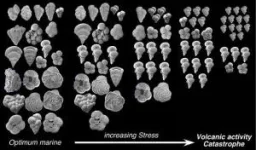
Princeton University researchers found that massive, prolonged eruptions of the Deccan Traps in India gradually eliminated species and resulted in the Cretaceous-Tertiary mass extinction that killed the dinosaurs 65 million years ago. Marine sediment trapped between Deccan lava flows revealed that a species known as planktonic foraminifera
Princeton University researchers found that massive, prolonged eruptions of the Deccan Traps in India gradually eliminated species and resulted in the Cretaceous-Tertiary mass extinction that killed the dinosaurs 65 million years ago. Marine sediment trapped between Deccan lava flows revealed that a species known as planktonic foraminifera