Hey EB!
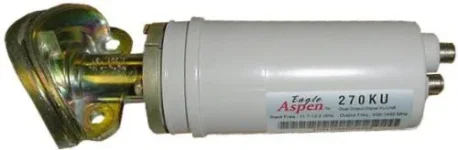
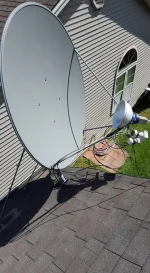
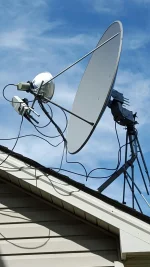
I just registered on the forum and read your thread with interest! Very nice thread, and I enjoyed reading about your findings and experiments. Just like you, I started to experiment more this past August on my motorized 1.2M GeoSatPro Offset dish that I use for C-Band; I wanted to get the very most as I could out of it. I posted some pics of my setup on the Welcome To LegitFTA Thread if you would like to see what I been working on. I have been on the hunt for the best commercial C-Band LNBF that I could find with the lowest stability numbers and the highest gain. I couldn't afford the $300+ LNB's very well without knowing if they would work, so I opted for the Chaparral 3G LNBF instead.
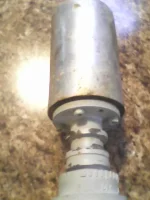
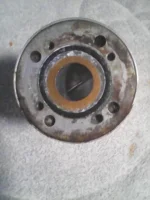
I WAS using the Titanium C-Band LNBF on the 1.2M dish for almost a year with half decent results with the matching conical scaler. Like you mentioned on other threads, the huge heatsink doesn't provide any real benefit other than to lure people into buying it for it's flashy appeal. Actually, I found the huge heatsink to be in the way when I needed to move the LNBF as close as it could go towards the dish only to have the heatsink hit the plastic bracket. After studying the spec's on Brians LNBF, I knew I could do better with a more professional brand, so I got the Chaparral.
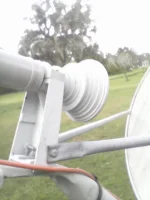
I installed the Chaparral LNBF on the 1.2M dish and with my Satlink WS-6933 meter, I started experimenting with the old Conical Scaler, a flat Scaler with a long bolt socket attached to it, and a huge aluminum lampshade I bought at Lowes. The Conical Scaler and flat Scaler only gave me 52% Q on the 99W Fox Station from MO.. I then cut out a large hole in the back of the aluminum lampshade, and put that on the LNBF to have the Quality jump up to 58-59%! So I got a clamp to secure the large lampshade onto the LNBF.
I rescanned the satellites to find out that I was now getting a few extra channels than before, and some channels came in better than before! It was difficult to watch the Weather Network with Brian's Titanium LNBF, but the pixilation cleared up after the Chaparral was installed. I am now happily divorced from Brian's products, I found something that is better! The majority of the users that are on "The Other Guys" Satellite forum all use Brian's Titanium LNBF and an Amiko A3 receiver. If your not using what they have, you will get stomped on for it. So while everyone is struggling with the Amiko A3 receivers quirks and Brians kind of half decent LNBF, I am ahead of that crowd with my own stuff.
The only thing I might change after reading your thread is my RG6 cable. I'm maybe running a good 30-40+ feet of Directv brand RG6 cable I bought at Skyvision, so it isn't bad, but maybe I can do better with the RG11 cable like you have? Otherwise, I think I have done just about all I can think of to get the most out of my dish. I'm looking forward to winter to see what other satellite channels I can get without having leaves in the way. Normally I leave the C-Band dish parked on the 58W satellite so I can always watch NHK World in HD.
I'm currently using the new Manhattan 1997 receiver, which I like, my favorite was the Manhattan 1933 receiver because it had a Sharp Tuner in it. But, I overcooked it by leaving it on all week without proper ventilation. :-(
I just registered on the forum and read your thread with interest! Very nice thread, and I enjoyed reading about your findings and experiments. Just like you, I started to experiment more this past August on my motorized 1.2M GeoSatPro Offset dish that I use for C-Band; I wanted to get the very most as I could out of it. I posted some pics of my setup on the Welcome To LegitFTA Thread if you would like to see what I been working on. I have been on the hunt for the best commercial C-Band LNBF that I could find with the lowest stability numbers and the highest gain. I couldn't afford the $300+ LNB's very well without knowing if they would work, so I opted for the Chaparral 3G LNBF instead.
I WAS using the Titanium C-Band LNBF on the 1.2M dish for almost a year with half decent results with the matching conical scaler. Like you mentioned on other threads, the huge heatsink doesn't provide any real benefit other than to lure people into buying it for it's flashy appeal. Actually, I found the huge heatsink to be in the way when I needed to move the LNBF as close as it could go towards the dish only to have the heatsink hit the plastic bracket. After studying the spec's on Brians LNBF, I knew I could do better with a more professional brand, so I got the Chaparral.
I installed the Chaparral LNBF on the 1.2M dish and with my Satlink WS-6933 meter, I started experimenting with the old Conical Scaler, a flat Scaler with a long bolt socket attached to it, and a huge aluminum lampshade I bought at Lowes. The Conical Scaler and flat Scaler only gave me 52% Q on the 99W Fox Station from MO.. I then cut out a large hole in the back of the aluminum lampshade, and put that on the LNBF to have the Quality jump up to 58-59%! So I got a clamp to secure the large lampshade onto the LNBF.
I rescanned the satellites to find out that I was now getting a few extra channels than before, and some channels came in better than before! It was difficult to watch the Weather Network with Brian's Titanium LNBF, but the pixilation cleared up after the Chaparral was installed. I am now happily divorced from Brian's products, I found something that is better! The majority of the users that are on "The Other Guys" Satellite forum all use Brian's Titanium LNBF and an Amiko A3 receiver. If your not using what they have, you will get stomped on for it. So while everyone is struggling with the Amiko A3 receivers quirks and Brians kind of half decent LNBF, I am ahead of that crowd with my own stuff.
The only thing I might change after reading your thread is my RG6 cable. I'm maybe running a good 30-40+ feet of Directv brand RG6 cable I bought at Skyvision, so it isn't bad, but maybe I can do better with the RG11 cable like you have? Otherwise, I think I have done just about all I can think of to get the most out of my dish. I'm looking forward to winter to see what other satellite channels I can get without having leaves in the way. Normally I leave the C-Band dish parked on the 58W satellite so I can always watch NHK World in HD.
I'm currently using the new Manhattan 1997 receiver, which I like, my favorite was the Manhattan 1933 receiver because it had a Sharp Tuner in it. But, I overcooked it by leaving it on all week without proper ventilation. :-(
Last edited: