Octagon SF8008 Supreme

I do have a TBS5925 that I have owned for a number of years. There are newer TBS cards on the market, but I do not own them and cannot speak from experience about them. What i have read about the newer TBS cards does not show any great improvement over the 5925 except DVB-S2X has been added. From my experience with the TBS5925, it had and advantage over most FTA receivers until around 2016. TBS pretty much lost most of its advantages when the Edision MIO4k's and the Octagon SF8008 came to market.

The APSK transponders are the benchmark for a decent DX type receiver. There are 16APSK feeds on C and Ku band. 32APSK with channels is rare, but they do exist at times. You need a decent satellite antenna system and a decent FTA type receiver to have a chance with the APSK transponders.

Messing with the frequency or symbol rate usually does little to nothing. Adjusting the dish itself usually does something. Then you have the joy of re calibrating every satellite. It all boils down to the satellite dish, coax cables, the parts that are on the satellite dish, and the way the parts are installed on the satellite dish. APSK transponders can be difficult.

There are some advantages to having a TBS card or similar. You can log the stream and do a few other things that are not hardly possible with a fta receiver. I was not happy with the SF8008 Supreme on ku band and felt like it was finding bogus transponders. A few satellites were checked with a person that uses a TBS card and has a decent Ku dish. The results from the Sf8008 Supreme and the TBS card were similar, almost identical. This is why I don't see much of an advantage today for tv watching between a TBS card and and decent DX type FTA receiver.

This is the second 32APSK transponder I have been able to check the SF8008 Supreme on. The Supreme gets a good review from me on the APSK transponders. Now they need to fix the low symbol rate transponders or have the decency to quit advertising low rate symbol transponders in the receiver description.
 
I can understand your view of the TBS cards. I see people asking all over forums for suggestions on which one is the best decision. And they are expensive. So. Buy once, cry once is valid on that.
They do seem more for the commercial market. Although getting sound and a picture on your TV from one on the pcie bus in a pc takes dedication.
Specs and reviews show that they are more feature rich than your average everyday FTA receiver.
For me. I'm a little bit interested in data satellites also. TBS and maybe a few others have a piece of software that allows you to pull data from a multistream transponder.
Take the NWS NOAAPORT data feed on 121W tp 4020V. When it was on.....89W???...my mio would hardly lock on to it. The signal would rapidly fluctuate. Not due to signal.
But at times i was able to get lock for long enough to snag some data with Wireshark. And with dvbsnoop. Mostly text of weather data.
Setting up an actual ground station is quite involved. Novra receivers are usually the defacto standard. They only have an Ethernet port for output.
They can also be used for sat TV reception. But again. Require pc software to do it just like a TBS or like card does.
Sorry for the rant....

I have noticed that blindscans on my mio show freqs. and sr a bit off from sat charts. 3940 sr 300000 5/6 for example turn up 3939, 3941 and 29999 and 30001 with fec varying here and there.
So. What gives? Hammering the same satellite. Even with tp range limits. Give wavering reults. LNB drift? Maybe. PLL isn't supposed to do that.
So what to do? Plug in the exact parameters shown in charts? Accept frequency drift?
The signal meters in FTA receivers surely arent granular enough to let you see very fine strenght gains or losses. Right?

If 16 & 32 ASPK are really that finicky. Yeah. Up and down a ladder to get your carcass out of the signal path is surely a big pita.
I didn't exactly get what images people are running in their new 8008's. And EB. I'm pretty sure you tried the driver swap trik.
I know that stuffing in your TNAP mio drivers into ViX really made a huge difference in overall tuner performance.

Gut feeling? Are the new 8008 receivers just too new and waiting for improvements to be released a possible reality. Or could they go stagnant?
The reality is that more and more FTA receivers will have similar chipsets and Broadcom will go away.
As Broadcom is getting out of the FTA market. I hear from BC's horses mouth that all of that has been turned over to their IP equipment division.
I was looking for info for Broadcom studio and the resources to flash a new BCM chip in a mio4k+ that was given to me.It got cooked due to a possible HDMI cable hot swap
The transient suppressors at the HDMI port shorted to ground and took out the BCM chip. Dead data lines and the chip was super hot. 210f with a thermal cam.
Shut them off and do your cable thing before putting the wall wart plug back in.
 
Last edited:
Satellite cards and satellite receivers are two different things. In 2012, a satellite card had some tv advantages because it could lock low symbol rates and APSK transponders. The TV satellite advantages a card had in 2012 had vanished in some FTA receiver models around 2016-2018. Yes, there are things you can only do with a satellite card.

Comparing a transponder frequency that your receiver found in blindscan to what someone else found in a blindscan may be different as lnb's or lnbf's are not very precise for the most part and neither is the fta receiver. Comparing the frequency you found against the frequency someone else found and then comparing those two frequencies to what is actually correct may result in 3 slightly different frequencies. There is also a doppler effect... The FEC can change or can be found wrong. Edision 4K receivers does a good job with finding the correct FEC.

Reception of APSK transponders that have tv channels is a test of the receiver along with a test of the satellite dish system. In a nutshell, APSK transponders are harder to receive and get a decent tv picture. Religious channels are usually the exact opposite of channels on APSK transponders. Religious channels usually take the least amount of signal to be viewable, and the picture quality reflects this.

The Octagon SF8008 Supreme is nothing more than a collection of old parts. The SF8008 Supreme uses a dated 4.4.35 kernel, which is the same as the SF8008. This kernel version should be good for a few more years, but they could have at least updated the kernel. Too lazy I guess, or didn't want to pay a guy to do it.

The Sf8008 Supreme performs well, and the internal SSD provision really makes a difference in the user experience. Some would say the wifi is better, but I don't use that feature much. And the SF8008 Supreme has a Useless-to-me Bluetooth. I see no reason to have this Bluetooth on the receiver, except maybe to advertise it as Bluetooth capable.

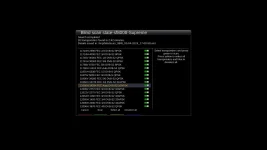
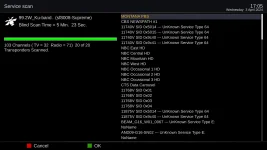
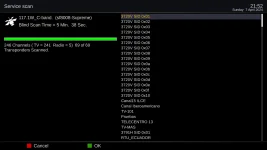
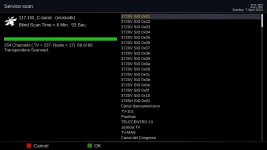
Ku blindscans with the SF8008 returns both 16 and 32 APSK transponders.Ku band is noted for having sports feeds on APSK transponders with channels, and I enjoy watching some of them. Shown below is a blindscan of 99w Ku that returns a bunch of junk transponders. But how do you sort the junk from the good? I don't know of an easy way to do that. Scanning all of this junk takes time. At least when the SF8008 Supreme finds APSK transponders with channels, it plays them. Some FTA receivers can't do that.

99w-ku-blindscan.webp<-------------------->99ku-scan-complete.webp

Code:
                       Scan Report 

< File created on Wednesday, April 03, 2024 at 17:02:39 > 
< Satellite =  99.2W Ku-band Galaxy 16 & T11/T14 >
< Receiver =  SF8008-Supreme >
< Enigma2 Image = Tnap 5.1 > 
< Kernel Version = 4.4.35 > 
< DVB Driver Date = 2024-01-04 > 
< Blindscan Frequency Range = 10700 to 12750 MHz > 
< Blindscan Symbol Rate Range = 1 to 60 Msps > 
< Blindscan Only Free Channels or Services? = False  > 
< Tuner = Tuner B: AVL62X1 (DVB-S2) >


< 'DVB-S2 8PSK 11718H / 2390 / 2/3' > Tp# 1
< [1] MONTANA PBS  1:0:1:1:1:FFFF:A302DC6:0:0:0: SNR = 13.42  /> 
< Transponder SNR =['13.42db'-Locked], LNB Power = 66.98 >
< Wed, 03 Apr 2024 17:02:42 /> 

< 'DVB-S2 8PSK 11724H / 4000 / 3/4' > Tp# 2
< [2] CBS NEWSPATH #1  1:0:19:1:102:0:A302DCC:0:0:0: SNR = 14.77  /> 
< Transponder SNR =['14.77db'-Locked], LNB Power = 69.73 >
< Wed, 03 Apr 2024 17:02:45 /> 

< 'DVB-S2 QPSK 11740V / 30001 / 1/2' > Tp# 3
< [3] 11740V SID 0x5014 --- UnKnown Service Type 64  1:0:64:5014:441:0:A30ADDC:0:0:0: SNR = 11.98  /> 
< [4] 11740V SID 0x5015 --- UnKnown Service Type 64  1:0:64:5015:441:0:A30ADDC:0:0:0: SNR = 11.98  /> 
< [5] 11740V SID 0x9c40 --- UnKnown Service Type 64  1:0:64:9C40:441:0:A30ADDC:0:0:0: SNR = 11.98  /> 
< [6] 11740V SID 0x9c41 --- UnKnown Service Type 64  1:0:64:9C41:441:0:A30ADDC:0:0:0: SNR = 11.98  /> 
< Transponder SNR =['11.98db'-Locked], LNB Power = 86.24 >
< Wed, 03 Apr 2024 17:02:50 /> 

< 'DVB-S2 8PSK 11761H / 30000 / 5/6' > Tp# 4
< [7] NBC East HD  1:0:1:3D:1:1:A302DF1:0:0:0: SNR = 16.89  /> 
< [8] NBC Central HD  1:0:1:3E:1:1:A302DF1:0:0:0: SNR = 16.89  /> 
< [9] NBC Mountain HD  1:0:1:3F:1:1:A302DF1:0:0:0: SNR = 16.89  /> 
< [10] NBC West HD  1:0:1:40:1:1:A302DF1:0:0:0: SNR = 16.89  /> 
< [11] NBC Occasional 1 HD  1:0:1:41:1:1:A302DF1:0:0:0: SNR = 16.89  /> 
< [12] NBC Occasional 2 HD  1:0:1:42:1:1:A302DF1:0:0:0: SNR = 16.89  /> 
< [13] NBC Occasional 3 HD  1:0:1:43:1:1:A302DF1:0:0:0: SNR = 16.89  /> 
< [14] CTS Data Carousel  1:0:C:44:1:1:A302DF1:0:0:0: SNR = 16.89  /> 
< Transponder SNR =['16.89db'-Locked], LNB Power = 87.16 >
< Wed, 03 Apr 2024 17:02:52 /> 

< 'DVB-S2 8PSK 11768V / 8750 / 5/6' > Tp# 5
< [15] 11768V SID 0x01  1:0:1:1:0:0:A30ADF8:0:0:0: SNR = 11.07  /> 
< [16] 11768V SID 0x02  1:0:1:2:0:0:A30ADF8:0:0:0: SNR = 11.07  /> 
< [17] 11768V SID 0x03  1:0:1:3:0:0:A30ADF8:0:0:0: SNR = 11.07  /> 
< [18] 11768V SID 0x04  1:0:1:4:0:0:A30ADF8:0:0:0: SNR = 11.07  /> 
< Transponder SNR =['11.07db'-Locked], LNB Power = 88.08 >
< Wed, 03 Apr 2024 17:02:56 /> 

< 'DVB-S2 QPSK 11790H / 11913 / AUTO' > Tp# 6
< Transponder SNR =['12.05db'-Locked], LNB Power = 89.00 >
< Wed, 03 Apr 2024 17:03:03 /> 

< 'DVB-S 11801H / 6338 / 1/2' > Tp# 7
< Transponder SNR =['17.48db'-Locked], LNB Power = 81.66 >
< Wed, 03 Apr 2024 17:03:11 /> 

< 'DVB-S 11875V / 5000 / 3/4' > Tp# 8
< [19] 11875V SID 0x5014 --- UnKnown Service Type 64  1:0:64:5014:441:0:A30AE63:0:0:0: SNR = 18.06  /> 
< [20] 11875V SID 0x9c40 --- UnKnown Service Type 64  1:0:64:9C40:441:0:A30AE63:0:0:0: SNR = 18.06  /> 
< Transponder SNR =['18.06db'-Locked], LNB Power = 75.23 >
< Wed, 03 Apr 2024 17:03:14 /> 

< 'DVB-S2 QPSK 11900V / 34285 / 5/6' > Tp# 9
< [21] BEAM_G16_W01_0067 --- UnKnown Service Type E:  1:0:E:44:43:1:A30AE7C:0:0:0: SNR = 13.22  /> 
< [22] NoName  1:0:0:1:43:1:A30AE7C:0:0:0: SNR = 13.22  /> 
< Transponder SNR =['13.22db'-Locked], LNB Power = 83.49 >
< Wed, 03 Apr 2024 17:03:16 /> 

< 'DVB-S2 32APSK 11960H / 16729 / 3/4' > Tp# 10
< Transponder SNR =['13.66db'-UnLocked], LNB Power = 70.65 >
< Wed, 03 Apr 2024 17:03:24 /> 

< 'DVB-S2 16APSK 12000H / 34284 / AUTO' > Tp# 11
< [23] AND09-G16-SN02 --- UnKnown Service Type E:  1:0:E:8:7:1:A302EE0:0:0:0: SNR = 14.4  /> 
< [24] NoName  1:0:0:1:7:1:A302EE0:0:0:0: SNR = 14.4  /> 
< Transponder SNR =['14.4db'-Locked], LNB Power = 81.66 >
< Wed, 03 Apr 2024 17:03:26 /> 

< 'DVB-S2 32APSK 12006V / 2757 / 3/4' > Tp# 12
< Transponder SNR =['8.61db'-UnLocked], LNB Power = 64.22 >
< Wed, 03 Apr 2024 17:03:45 /> 

< 'DVB-S2 QPSK 12022V / 2275 / 3/4' > Tp# 13
< [25] 1A   (Radio #1)  1:0:2:37:1:4:A30AEF6:0:0:0: SNR = 9.97  /> 
< [26] 1A Hour 1   (Radio #2)  1:0:2:17:1:4:A30AEF6:0:0:0: SNR = 9.97  /> 
< [27] 1A Hour 2   (Radio #3)  1:0:2:1B:1:4:A30AEF6:0:0:0: SNR = 9.97  /> 
< [28] All Things Considered   (Radio #4)  1:0:2:33:1:4:A30AEF6:0:0:0: SNR = 9.97  /> 
< [29] BBC APM World Service   (Radio #5)  1:0:2:B:1:4:A30AEF6:0:0:0: SNR = 9.97  /> 
< [30] BBN   (Radio #6)  1:0:2:7:1:4:A30AEF6:0:0:0: SNR = 9.97  /> 
< [31] California Report Morning Feed   (Radio #7)  1:0:2:14:1:4:A30AEF6:0:0:0: SNR = 9.97  /> 
< [32] California Report Morning Feed II   (Radio #8)  1:0:2:1C:1:4:A30AEF6:0:0:0: SNR = 9.97  /> 
< [33] C-Band Barker   (Radio #9)  1:0:2:2D:1:4:A30AEF6:0:0:0: SNR = 9.97  /> 
< [34] Classical 24   (Radio #10)  1:0:2:14A:1:4:A30AEF6:0:0:0: SNR = 9.97  /> 
< [35] Democracy Now 08:00 ET M-F Live w/File   (Radio #11)  1:0:2:11:1:4:A30AEF6:0:0:0: SNR = 9.97  /> 
< [36] Fresh Air with Terry Gross   (Radio #12)  1:0:2:1D:1:4:A30AEF6:0:0:0: SNR = 9.97  /> 
< [37] Good Karma Brands Milwaukee LLC - HUB - Brewers   (Radio #13)  1:0:2:21:1:4:A30AEF6:0:0:0: SNR = 9.97  /> 
< [38] Good Karma Brands Milwaukee LLC - HUB - Bucs   (Radio #14)  1:0:2:20:1:4:A30AEF6:0:0:0: SNR = 9.97  /> 
< [39] Inauguration Address of Kathy Hochul   (Radio #15)  1:0:2:2E:1:4:A30AEF6:0:0:0: SNR = 9.97  /> 
< [40] KANZ - HUB   (Radio #16)  1:0:2:3F:1:4:A30AEF6:0:0:0: SNR = 9.97  /> 
< [41] KEMC - Ku HUB   (Radio #17)  1:0:2:3B:1:4:A30AEF6:0:0:0: SNR = 9.97  /> 
< [42] KNAU   (Radio #18)  1:0:2:31:1:4:A30AEF6:0:0:0: SNR = 9.97  /> 
< [43] KOSU   (Radio #19)  1:0:2:3C:1:4:A30AEF6:0:0:0: SNR = 9.97  /> 
< [44] KPR   (Radio #20)  1:0:2:19:1:4:A30AEF6:0:0:0: SNR = 9.97  /> 
< [45] KPR Audio Reader   (Radio #21)  1:0:2:3E:1:4:A30AEF6:0:0:0: SNR = 9.97  /> 
< [46] KQEDs Statewide Forum   (Radio #22)  1:0:2:27:1:4:A30AEF6:0:0:0: SNR = 9.97  /> 
< [47] KSOS   (Radio #23)  1:0:2:30:1:4:A30AEF6:0:0:0: SNR = 9.97  /> 
< [48] Ku-Band Barker   (Radio #24)  1:0:2:45:1:4:A30AEF6:0:0:0: SNR = 9.97  /> 
< [49] KUFM - HUB   (Radio #25)  1:0:2:D:1:4:A30AEF6:0:0:0: SNR = 9.97  /> 
< [50] KUNC - KuHUB   (Radio #26)  1:0:2:25:1:4:A30AEF6:0:0:0: SNR = 9.97  /> 
< [51] KUSC - Ku HUB   (Radio #27)  1:0:2:34:1:4:A30AEF6:0:0:0: SNR = 9.97  /> 
< [52] KUSU - Ku HUB   (Radio #28)  1:0:2:28:1:4:A30AEF6:0:0:0: SNR = 9.97  /> 
< [53] KVPR - Ku-HUB   (Radio #29)  1:0:2:22:1:4:A30AEF6:0:0:0: SNR = 9.97  /> 
< [54] Marketplace Morning I - 551   (Radio #30)  1:0:2:E:1:4:A30AEF6:0:0:0: SNR = 9.97  /> 
< [55] Marketplace Morning VI - 1051   (Radio #31)  1:0:2:18:1:4:A30AEF6:0:0:0: SNR = 9.97  /> 
< [56] Marketplace Morning II - 651   (Radio #32)  1:0:2:F:1:4:A30AEF6:0:0:0: SNR = 9.97  /> 
< [57] Marketplace Morning III - 751   (Radio #33)  1:0:2:10:1:4:A30AEF6:0:0:0: SNR = 9.97  /> 
< [58] Marketplace Morning IV - 851   (Radio #34)  1:0:2:13:1:4:A30AEF6:0:0:0: SNR = 9.97  /> 
< [59] Marketplace Morning V - 951   (Radio #35)  1:0:2:15:1:4:A30AEF6:0:0:0: SNR = 9.97  /> 
< [60] Marketplace   (Radio #36)  1:0:2:35:1:4:A30AEF6:0:0:0: SNR = 9.97  /> 
< [61] Missouri Governors Debates - Live Missouri Thea   (Radio #37)  1:0:2:2A:1:4:A30AEF6:0:0:0: SNR = 9.97  /> 
< [62] Morning Edition   (Radio #38)  1:0:2:2:1:4:A30AEF6:0:0:0: SNR = 9.97  /> 
< [63] NPR Distribution Idle   (Radio #39)  1:0:2:1BD:1:4:A30AEF6:0:0:0: SNR = 9.97  /> 
< [64] NNN/Native America Calling Live Wednesday 1300   (Radio #40)  1:0:2:3:1:4:A30AEF6:0:0:0: SNR = 9.97  /> 
< [65] NNN/Native America Calling Live Thursday 1300   (Radio #41)  1:0:2:5:1:4:A30AEF6:0:0:0: SNR = 9.97  /> 
< [66] NNN/Native America Calling Live Tuesday 1300   (Radio #42)  1:0:2:3A:1:4:A30AEF6:0:0:0: SNR = 9.97  /> 
< [67] NNN/Native America Calling ALASKA STATION FEED   (Radio #43)  1:0:2:2C:1:4:A30AEF6:0:0:0: SNR = 9.97  /> 
< [68] NOC Tone Test   (Radio #44)  1:0:2:1:1:4:A30AEF6:0:0:0: SNR = 9.97  /> 
< [69] NPR Newscasts   (Radio #45)  1:0:2:71:1:4:A30AEF6:0:0:0: SNR = 9.97  /> 
< [70] NPRs Here & Now   (Radio #46)  1:0:2:1E:1:4:A30AEF6:0:0:0: SNR = 9.97  /> 
< [71] NPR Special Events Coverage/Breaking News   (Radio #47)  1:0:2:5F:1:4:A30AEF6:0:0:0: SNR = 9.97  /> 
< [72] NPR Squawk   (Radio #48)  1:0:2:24:1:4:A30AEF6:0:0:0: SNR = 9.97  /> 
< [73] NWPB - NWC - NPR & Classical Music   (Radio #49)  1:0:2:4:1:4:A30AEF6:0:0:0: SNR = 9.97  /> 
< [74] NWPB - NWN - NPR News   (Radio #50)  1:0:2:47:1:4:A30AEF6:0:0:0: SNR = 9.97  /> 
< [75] On Point from APM   (Radio #51)  1:0:2:16:1:4:A30AEF6:0:0:0: SNR = 9.97  /> 
< [76] Engineering Test PGM   (Radio #52)  1:0:2:10B:1:4:A30AEF6:0:0:0: SNR = 9.97  /> 
< [77] PCC - HUB   (Radio #53)  1:0:2:38:1:4:A30AEF6:0:0:0: SNR = 9.97  /> 
< [78] POSTPONED UNTIL TBD: Missouri Governors Debates   (Radio #54)  1:0:2:2B:1:4:A30AEF6:0:0:0: SNR = 9.97  /> 
< [79] PubMusic PubJazz1-General   (Radio #55)  1:0:2:1BC:1:4:A30AEF6:0:0:0: SNR = 9.97  /> 
< [80] Radio Bilingue Series   (Radio #56)  1:0:2:C3:1:4:A30AEF6:0:0:0: SNR = 9.97  /> 
< [81] Radio Bilingue - Ku HUB   (Radio #57)  1:0:2:41:1:4:A30AEF6:0:0:0: SNR = 9.97  /> 
< [82] Streaming System Test Tone   (Radio #58)  1:0:2:1F:1:4:A30AEF6:0:0:0: SNR = 9.97  /> 
< [83] Texas Statewide Newscasts   (Radio #59)  1:0:2:12:1:4:A30AEF6:0:0:0: SNR = 9.97  /> 
< [84] Texas Standard   (Radio #60)  1:0:2:1A:1:4:A30AEF6:0:0:0: SNR = 9.97  /> 
< [85] The World   (Radio #61)  1:0:2:32:1:4:A30AEF6:0:0:0: SNR = 9.97  /> 
< [86] The World 1800 LWSFT   (Radio #62)  1:0:2:39:1:4:A30AEF6:0:0:0: SNR = 9.97  /> 
< [87] Today Explained Live   (Radio #63)  1:0:2:2F:1:4:A30AEF6:0:0:0: SNR = 9.97  /> 
< [88] WAMC - Ku HUB   (Radio #64)  1:0:2:8:1:4:A30AEF6:0:0:0: SNR = 9.97  /> 
< [89] WNRN - KuHUB   (Radio #65)  1:0:2:23:1:4:A30AEF6:0:0:0: SNR = 9.97  /> 
< [90] WRVO-KuHUB   (Radio #66)  1:0:2:40:1:4:A30AEF6:0:0:0: SNR = 9.97  /> 
< [91] WUAL   (Radio #67)  1:0:2:6:1:4:A30AEF6:0:0:0: SNR = 9.97  /> 
< [92] WUNC Music - HUB   (Radio #68)  1:0:2:36:1:4:A30AEF6:0:0:0: SNR = 9.97  /> 
< [93] WUNC News - HUB   (Radio #69)  1:0:2:3D:1:4:A30AEF6:0:0:0: SNR = 9.97  /> 
< [94] WVPB   (Radio #70)  1:0:2:9:1:4:A30AEF6:0:0:0: SNR = 9.97  /> 
< [95] YESFM - Ku HUB   (Radio #71)  1:0:2:29:1:4:A30AEF6:0:0:0: SNR = 9.97  /> 
< Transponder SNR =['9.94db'-Locked], LNB Power = 63.31 >
< Wed, 03 Apr 2024 17:03:51 /> 

< 'DVB-S2 32APSK 12064H / 1160 / 3/4' > Tp# 14
< Transponder SNR =['12.96db'-UnLocked], LNB Power = 66.98 >
< Wed, 03 Apr 2024 17:04:09 /> 

< 'DVB-S2 32APSK 12065H / 1493 / 3/4' > Tp# 15
< Transponder SNR =['10.91db'-UnLocked], LNB Power = 66.98 >
< Wed, 03 Apr 2024 17:04:28 /> 

< 'DVB-S2 32APSK 12085H / 2000 / 3/4' > Tp# 16
< Transponder SNR =['11.84db'-UnLocked], LNB Power = 65.14 >
< Wed, 03 Apr 2024 17:04:46 /> 

< 'DVB-S2 QPSK 12096H / 3676 / 4/5' > Tp# 17
< [96] 12096H SID 0x01  1:0:1:1:0:0:A302F40:0:0:0: SNR = 7.29  /> 
< Transponder SNR =['7.29db'-Locked], LNB Power = 68.81 >
< Wed, 03 Apr 2024 17:04:51 /> 

< 'DVB-S2 32APSK 12120H / 16727 / 3/4' > Tp# 18
< Transponder SNR =['15.79db'-UnLocked], LNB Power = 83.49 >
< Wed, 03 Apr 2024 17:04:59 /> 

< 'DVB-S2 8PSK 12140V / 29999 / 3/4' > Tp# 19
< [97] HD01  1:0:1:3:1:1:A30AF6C:0:0:0: SNR = 14.07  /> 
< [98] HD02  1:0:1:4:1:1:A30AF6C:0:0:0: SNR = 14.07  /> 
< [99] HD03  1:0:1:5:1:1:A30AF6C:0:0:0: SNR = 14.07  /> 
< [100] HD06  1:0:1:6:1:1:A30AF6C:0:0:0: SNR = 14.07  /> 
< [101] SD02 Create  1:0:1:C:1:1:A30AF6C:0:0:0: SNR = 14.07  /> 
< [102] FNX SD08  1:0:1:F:1:1:A30AF6C:0:0:0: SNR = 14.07  /> 
< [103] SD04 World  1:0:1:E:1:1:A30AF6C:0:0:0: SNR = 14.07  /> 
< Transponder SNR =['14.07db'-Locked], LNB Power = 88.08 >
< Wed, 03 Apr 2024 17:05:01 /> 

< 'DVB-S2 QPSK 12166V / 5000 / 1/2' > Tp# 20
< Transponder SNR =['13.61db'-UnLocked], LNB Power = 86.24 >
< Wed, 03 Apr 2024 17:05:20 /> < 

Blind Scan Time = 5 Min. 23 Sec.
103 Channels ( TV = 32  Radio = 71)  20 of 20 Transponders Scanned.
 
Good stuff.
I was referring to satellite charts and what you can find from sources like SES for the transponder configurations. Of course things change. But just like any broadcaster. I would believe if they state three thousand ninety megaherts and a sr of 30000 with a fec of..... you probably can count on it being pretty much dead nuts.
A ground based receiver on the other hand showing slightly different or wavering signal characteristics. I blame it on the stuff here.
Doppler. On a geostationary satellite. i dunno. Definitely for LEO and ham sats. Snag the ISS some time and listen to the whistle on SSB. Or any ham sat. NOAA 137 MHz sats.

If I get it correctly. And I know little of Linux. That all receivers using the same chipsets that the SF8008 uses. Are running a dated kernel?
And that perhaps there are some tricks up sleeves that could enhance the performance and capabilities by using a more modern one?
Meaning that to update the kernel, the entire OS and drivers, plugins need to be rewritten?
Such as your dreaded useless bluetooth. A newer kernel would allow a different bluetooth stack and perhaps let you use a soundbar, earphones?
I mean. Sitting in my chair. I wouldn't know a different Linux kernel from shineola.
 
Satellite frequencies posted by the broadcaster or anyone else formally associated with the satellite industry are probably accurate. Satellite frequencies from TVROSAT, Lyngsat, or similar are probably not accurate.

The Linux kernel could be thought of as the operating system. A few examples of kernel functions would be: memory usage, manage cpu processes, assist with device drivers, and security. What we want to do mainly with a satellite FTA receiver is watch tv. This means we need the motorized satellite dish to move precisely where we want it to move, and any switches in the antenna system to switch when they are supposed to. Enigma2 provides the basics for the FTA receiver to function as a FTA receiver. A FTA receiver can run Linux without enigma2, but enigma2 cannot run without Linux.

Older kernels work for the basic FTA receiver functions, but the older kernels may not be able to support new features or addons. FTA receiver manufacturers don't update the kernel because they are either too lazy to do it, or they don't want to pay someone to do it. This explains why the shiny new SF8008 Supreme has the same kernel as the older SF8008.

A FTA enigma2 receiver is sort of put together like this: Bootloader, Linux Operating System, and Enigma2. You can botch or corrupt enigma2 and fix it by loading the needed files.You can botch or corrupt the Linux OS and reload the image to fix that mistake. But if you somehow manage to corrupt or destroy the bootloader, then you have created a problem that most users cannot recover from.

The Sf8008 Supreme bootloader seems to be the same as the older SF8808 bootloader. I managed to delete the Linux operating system and pretty much erased all 4 slots in the process by pressing one keyboard key named "Enter". The bootloader allowed a recovery image to be loaded and shortly all was fine again. But you have had a bad day if you manage to destroy, disable, or damage the bootloader. Long story short: It is nice to have all 4 slots in the receiver mounted in one folder. Just be sure to Not Delete that folder...
 
Googled SF8008 Supreme and came up with this:
https://gofastmotorsports.com/sf8008supreme.htm

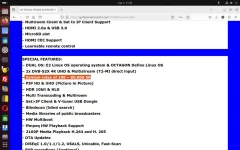
And of course, Rick is advertising the low symbol rate capability which the receiver Does Not Have now and probably never will. So either Rick does not test his products or he does not care. Either way, the result is the same: We are being told a LIE! Octagon Knows the Supreme cannot handle low symbol rates. They have known it for months... The LIE continues. It is possible the low symbol rate could be adjusted somewhat. But I doubt it ever goes down to 100. Avalink just doesn't seem to support that. We will see...

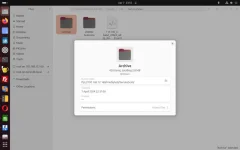
Screenshot from 2024-04-04 21-28-39.webp
 
Probably if he didn't advertise the company specs, Octagon would have branded him as an uncooperative reseller. Lately, it seems you have to go with the flow in order to survive, or maybe not..... lol
 
Looks like WOS is going to stock them also. Next Monday's pre-order price is £120.95 or at current USD =152.84 less shipping.
 
Subtract 20 Sterling Pounds from that price as we are not supposed to pay VAT. Anyway, it is sort of moot point because WOS will not sell to North America unless they have recently changed their policy.
 
Seems they have changed their policy or they have not updated their cart. Minus VAT plus shipping to U.S. comes out to £129.95 or 164.22 at current USD. But, obviously the prices will go up after the pre-order expires. The same SR advertising specs are being displayed.
 
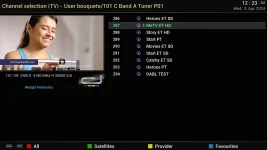
16APSK 4/5 FEC feed is up on 103wKu. The Supreme plays these feeds without error, providing there is enough signal. The tv picture is respectable too.

1_0_1_2_3_1_A0AAF45_0_0_0_20240406160232.webp
 
A little more investigating was done this evening, and now everything about the Supreme makes sense. More or less, The Sf8008 Supreme is an Edision 4K! Here is why:

First, this is what is advertised on Octagon's website for the SF8008 Supreme:
SPECIAL OWN FEATURES:
– DUAL OS: E2 Linux OS operating system & OCTAGON Define Linux OS
– DVB-S2X 4K UHD & Multistream (T2-MI Direct input)
– Symbol rates of 100 – 80,000 SR

Both symbol rates of 100 and 80,000 are fiction and can be proved as such. Let's look at something else first.

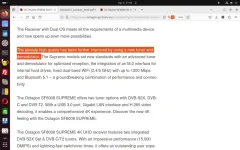
Octagon's description for the Sf8008 Supreme:
Supreme-Description.webp

Okay. So Octagon says the Supreme has a new tuner and new demodulator.
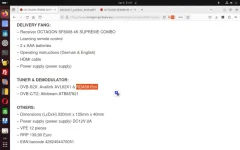
Here are the listed SF8008 Supreme tuner specs from Octagon's website:
Supreme-tuner-description.webp

Octagon has the description listed backwards. The demodulator would be AVL, but it is not AVL62X1, except maybe in a technical sense.

Here is Octagon's SF8008 description from their website:
SF8008-tuner-specs.webp

Okay...Now remember earlier the Supreme was supposed to have a new tuner and demodulator? Why then do they list the tuner( RDA5815m) as being the same for both the SF8008 and the SF8008 Supreme? My guess is they are the same, but it is sort of difficult to properly id the tuner.

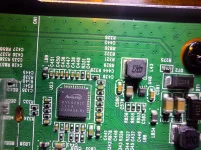
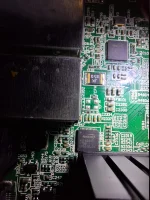
But the demodulator, We can properly id it. To id the demodulator, the cover of the SF8008 Supreme has to be removed, then the card reader has to be either removed or cut out of the receiver. The demodulator chip is hidden under the card reader and cannot be seen unless the card reader is removed.

Here is the SF8008 Supreme demodulator chip:
Supreme-AVL6261C.webp

IMO, setting the id to AVL62X1 in the receiver was nothing more than an attempt to hide the AVL6261. So really the demodulator for the SF8008 Supreme is AVL6261C, Not 626X1.

Let's look a little more...

Here is the Edision OS MIO 4k+ demodulator chip:
Edision-MIO-AVL6261C.webp

A bit harder to see, but the Edision also has AVL6261C!

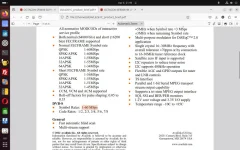
Now the Avalink specs for AVL6261C:
AVL6261C-Avalink-specs.webp

So the real specs for the SF8008 Supreme on symbol rate is 1,000 to 60,000. This is nowhere near 100 to 80,000 that Octagon is claiming for the SF8008 Supreme. Yes, we have modified the MIO receivers so they receive a symbol rate down to around 500. But the satellite blindscan slows way down when you do this.

Can the AVL6261C be modded to go down to 100 in symbol rate? I seriously doubt it. The Supreme is still a good receiver, but there is no reason for Octagon to outright lie like this. it will be interesting to see what others think when they buy this receiver and find the low symbol rates are fiction. (I am sure Rick's boyz will be happy!) In a nutshell, The SF8008 Supreme is an Edision 4K when it comes to satellite reception.

Links used in this post:
https://www.octagon-germany.eu/prod...eceiver/satellit-dvb-s2/sf8008_supreme_combo/

https://www.octagon-germany.eu/produkte/digital-receiver/hdtv-receiver/satellit-dvb-s2/sf8008/

https://github.com/availink/documentation/blob/master/AVL6261/AVL6261C_product_brief.pdf
 
Last edited:
What should happen? How it should happen? The terminology. Any fixes? Whoosh!......right over my head.
What is your opinions on these things? Do they have anything to do with anything?
Without going back to school what is long and short frame and does it apply to the issues?
Questions man, questions.

https://github.com/availink/dvb-frontends-availink/releases

https://www.sat-universe.com/index.php?threads/dvb-s2x.317633/

Edit:

And this too

https://github.com/availink/dvb-frontends-availink/issues/3
 
Last edited:
What should happen? How it should happen? The terminology. Any fixes? Whoosh!......right over my head.
What is your opinions on these things? Do they have anything to do with anything?
Without going back to school what is long and short frame and does it apply to the issues?
Questions man, questions.

https://github.com/availink/dvb-frontends-availink/releases

https://www.sat-universe.com/index.php?threads/dvb-s2x.317633/

Edit:

And this too

https://github.com/availink/dvb-frontends-availink/issues/3

Do they have anything to do with anything?
:D

Really I have no good idea of what you are asking. Transponders in Europe are transponders in Europe. We cannot receive the European transponders, so why worry with their problems? DVB-S is DVB-S so the same or similar situation can apply to us, but not today!

As for long frame or short frame in DVB-S satellite, information about this is on the internet. As for the link to the Avalink conversations and files, they do not apply to the SF8008 Supreme because the Supreme system file structure is different. You cannot for example load the Avalink 62X1 firmware file in the Supreme receiver with ease as it does not reside in /lib/firmware in the Supreme's system files.
 
Most likely, the SI 2166-D Or SI2166D demodulator chip was not used in the SF8008 Supreme because it is no longer available in an amount large enough for a production run. FTA receivers are manufactured for several different vendors at one time. There are versions of the SF8008 Supreme named uClan and I think GigaBlue. FTA receivers are manufactured in the same manner as cheap Vodkas where you do nothing but stop the assembly line and change labels. Then each vendor will put his bootloader and a few other items in the receiver to make it a bit different.

Avalink made some AVL62X1 items public where anyone can build them. There are a couple of custom built AVL6261 drivers in the TNAP feeds for the current Edision 4K receivers. One customized driver made for Europe goes "out of band" and allows reception down to around 700MHz. Normal reception is around 950-2150MHz for a satellite receiver.

Shown below is a comparison of blindscans between the Edision MIO4K and the SF8008 Supreme. The MIO4K with the modded driver finds transponders in the 600-800 symbol rate range and scans their radio channels. The SF8008 Supreme doesn't even know these transponders exist! The SF8008 Supreme will at times scan these transponders in the 600-800 symbol rate range correctly if they are entered manually. But even with manual entry, the SF8008 Supreme is not consistent with transponders in the 600-800 symbol rate range.

SF8008-Supreme-117w.webp<-------------------->MIO-117w.webp

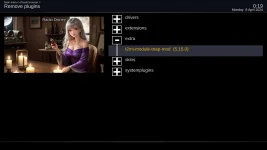
Here is what the Edision modded driver looks like in the feeds:
1_0_2_BB8_1_1_97D8F61_0_0_0_20240408001952.webp


I don't see it getting any better than what the modded MIO can produce for the SF8008 Supreme. These two blindscans don't tell us which is the better receiver because blindscan in general is not predictable. But what these two blindscans do tell us is the MIO can find and resolve transponders in the 600 symbol rate range, but the Edision cannot.

The blindscan slows down and to a degree the ServiceScan seems to slow down when using the modded Avalink 6261 driver in the MIO. We can expect similar if the SF8008 Supreme is modded. I plan to keep the current drivers the Supreme has now if any future drivers are released because they may make things worse instead of making them better.

Blindscan logs of the two scans shown above are attached.
 

Attachments

Last edited:
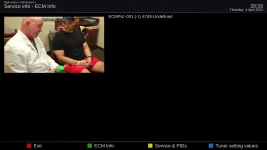
Over 400 scans have been done on the SF8008 Supreme. Most of these scans were satellite blindscan. At times, blindscan will hang, fail to start or fail to complete. There is no rhyme or reason for the blindscan failures: They just happen at random times. My conclusion is blindscan is more similar to the Edision MIO 4K's than the SF8008. We will just have to wait and see if it is improved.

Screenshot from 2024-04-07 23-55-03.webp
 

Do they have anything to do with anything?
:D

Really I have no good idea of what you are asking. Transponders in Europe are transponders in Europe. We cannot receive the European transponders, so why worry with their problems? DVB-S is DVB-S so the same or similar situation can apply to us, but not today!

People in Europe commonly peek at our most eastern satellites that have a footprint which allows them to have at least fringe reception..
The DVB-S, DVB-S2, etc. standards state nothing is different for any continent, region. They are supposedly set in stone standards.
In essence if we were able to receive European transponders nothing special would be needed to do it.
We need a frequency. We need the symbol rate. And the FEC. Modulated or not, if the transponder in space is active. You should get a received signal and lock. Yes?
Take Smithsonian on 127W. It has been active but no video. audio content for a long time. At least from what I can tell from analyzing the signal.
So. Without any ambiguity or confusion. I have not found any tech. that says the standards for us is different than theirs.

Line scan displays and audio frequencies picked out of a portion of the transmission bandwidth are obsolete. NTSC. PAL, CCIR might stillbe used. Beyond me.
But I do know that the receivers used here are the same as every place. Power supplies an exception. You can take your USA Playstation 2 overseas and now that you can play games just fine. Region lock an exception. Something a VPN can fix in a jif.


As for long frame or short frame in DVB-S satellite, information about this is on the internet. As for the link to the Avalink conversations and files, they do not apply to the SF8008 Supreme because the Supreme system file structure is different. You cannot for example load the Avalink 62X1 firmware file in the Supreme receiver with ease as it does not reside in /lib/firmware in the Supreme's system files.


What is interesting to discover is the amateur satellite QO-100 has a DVB-S2 transponder and folks are posting being able to receive it with a symbol rate of 333.
Some mention 333. With the SF8008. Recently.
From the git and links I posted. git looks like the SF8008 drivers are being addressed and updated 2 months ago.
The Octagon forum. It appears as if users are identifying the symbol rate issue. And bringing up the advertised vs actual symbol rate issue.
You're right. Extracting an openpli image shows drivers for the tuner that seems to be tailored for the MPU. Searching for .ko files gives hints that -this must be it-. Opening the file shows that it is the tuner driver.


Sorry. Not familiar with long or short frame. Heck I looked at a satellites.xml file and sure enough. At the end of a line entry there is long and short.
It's been awhile but I didn't know that the .xml file formatting had been changed or updated. Then again. One day multistream popped up in it.

With all of the griping going on about the Octagon I just thought that if folks are not aware that there may be updates. Or a different 'nightly' image that at least experimentally addresses the sr issues. Figured it might open up some eyes. Sorry for that. I ain't even sure if the only image people are using is openatv or what. Tell me please.

It's just that looking at the back and forth chatter going on at least in the Octagon forum. There is interest in addressing the issue and what happened to cause it. Maybe even active fixes coming soon.
 
Back
Top