el bandido
TNAP-Images
WHY would you need an attenuator??? Sort of lost here....

WHY would you need an attenuator??? Sort of lost here....
https://tinysa.org/wiki/pmwiki.php?n=Main.Transmitters
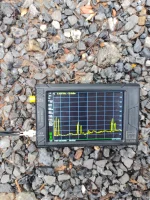
![20220730_111856[1].webp](https://legitfta.com/forum/data/attachments/10/10144-f3708feabc2b54283508791fb43c880b.jpg?hash=PTmIpAnkvQ "20220730_111856[1].webp")
Connecting to an LNBF:
Use a splitter rated 2GHz with one port power passing (or a 2 port power passing with a voltage block on one port). Connect the power passing leg to the STB to power the LNBF and select the polarity. Connect the non-power passing port to the Tiny SA. No need to attenuate as the internal attenuation should be fine. If you find the internal attenuator is not enough, there are some resellers on Amazon that package a selection of attenuator values or buy a step attenuator on Ebay or Amazon....
View attachment 17569
Date Ordered: Tuesday 03 January, 2023
Products
------------------------------------------------------
1 x JETSTREAM SMABNC (SMABNC) = $3.50
1 x TINYSA TINYSAULTRA (TINYSAULTRA) = $129.95
1 x JETSTREAM JT4120 (JT4120) = $3.95
1 x JETSTREAM SMAUHF (SMAUHF) = $4.95
------------------------------------------------------
Sub-Total: $142.35
United States Postal Service (Priority Mail®): $11.00
Sales Tax: $10.73
Total: $164.08
***Shipping charges are only an estimate. If shipping is more, we will notify you before shipping***
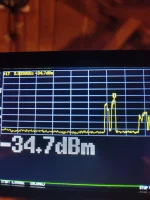
....I have antennas aimed at this cell tower for my home internet. The Tiny SA was connected to one of these antennas when the photo shown below was taken. The signals around 3.9 GHz are about as strong as the rest of the signals coming from this cell tower. This is very interesting to me, and I would not have known about it except for the Tiny SA analyzer.
View attachment 17579