Anyone thinking about using a lnb for a signal finder or direction finding needs to consider the lnb gain. First you have to power the thing. Then you are gonna have a 50-60 db amp right next to your sensitive receiver. Coiling up 100 feet or thereabouts of some lossy rg6 might actually help in this particular situation. To me, it is much simpler and better to use a small directional antenna. You don't learn anything by doing nothing. Try it and see...
https://en.wikipedia.org/wiki/Low-noise_block_downconverter
The LNB is a combination of low-noise amplifier, frequency mixer, local oscillator and intermediate frequency (IF) amplifier. It serves as the RF front end of the satellite receiver, receiving the microwave signal from the satellite collected by the dish, amplifying it, and downconverting the block of frequencies to a lower block of intermediate frequencies (IF).
https://orbitalresearch.net/10-things-to-look-for-in-an-lnb/
Gain
Signal gain â₉€œ the extent to which an amplifier boosts the strength of the signal from the antenna â₉€œ is not usually an issue as most LNBs come with a fixed gain value of about 60 dB. However, an LNBâ₉„¢s gain is important to consider in two key circumstances: when dealing with long interfacility links (IFL) or large, high-gain antennas.
With regards to IFL, the longer the cable that connects your outdoor satellite receiver to indoor routers or transmitters, the greater the signal loss. In these cases, an LNB that delivers higher gain is necessary.
With large antennas (e.g. at teleports) too much gain can be an issue. These antennas introduce large signal power to the first stage of an LNB, which can saturate the LNB and cause signal compression. When the signal is compressed, the output power no longer increases with the input power. This creates a non-linear response â₉€œ which in turn produces signal distortion and harmonics. An LNB that can be customized for gain is critical in these circumstances.
https://www.satcomresources.com/satellite-lnb-specification-guide
Gain
The LNB Gain is the amount the incoming signal is amplified. At first glance, the higher the gain you could get would be the obvious thing to look for, however this is not the only critereon that you should be considering when it comes to LNBs. When you have a large antenna looks at a high powered group of satellites, the gain could be so high that it could overload the front end of the receiver. You could have too much gain.
Even if the receiver can handle a massive amount of signal, there can be problems within the LNB itself when a large amount of amplification is involved. This leads to the generation of artifacts, spurious signals and distortion products that are akin to the distorition that you would get from turning up the volume on your radio. This distortion will interfere with the reception of your signals.
So unless you have specific reasons for an ultra-high gain LNB, then look for a gain of around 50 - 60 dB.
There is a group of idiots or uninformed that think more lnb gain is great. Just use a 70db gain lnb and a smaller dish. Everything will be OK
https://www.megasat.tv/en/produkt/high-gain-single-lnb/
LNBs high-gain
The ideal solution for difficult to receive satellites and small satellite dish. high-gainLNBs satellites offer a high signal amplification of 70 dB. This ensures good signal stability even for a small Camping dishone with a diameter of just 40 cm.
The low noise figure of only 0.1 dB ensures the best picture and sound quality.
The Single LNB is suitable for reception from a satellite and for connection to a receiver.
The low noise figure of only 0.1 dB....Lol. How many times do we hear that lie?
The same rules of an antenna apply: You cannot increase antenna performance by using amplifiers that increase gain. You can amplify a signal that is already there, but you cannot create more signal with a signal amplifier.


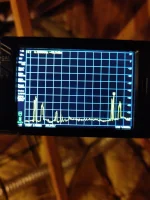
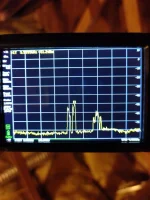
 oint:
oint: